
On hillsides throughout the Mid-Atlantic, the evidence is still there.
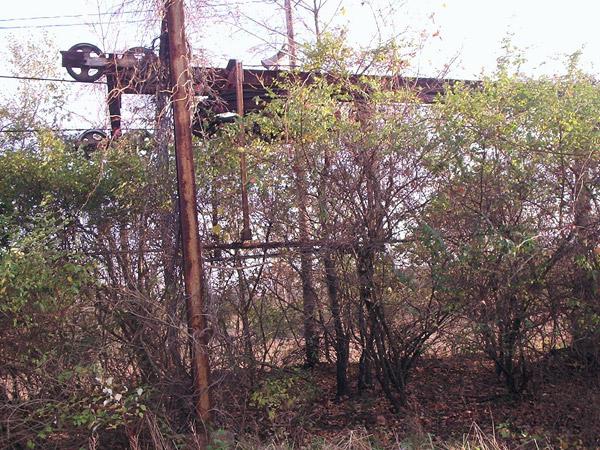
A straight line of trees may mark the path of a long-removed lift. An unusually broad clearing may once have been a ski slope. A concrete footing, rusted pulley, abandoned light pole, or section of buried pipe can survive decades after the skiers, lodge, and trail signs have disappeared. In other places, even those remnants are gone, erased by forests, housing developments, highways, golf courses, and the passage of time.
Today, around 30 major ski areas operate across the Mid-Atlantic. DCSki has documented another 126 that have closed.
Taken individually, each entry in DCSki’s Lost Ski Areas collection preserves the history of a particular place. Taken together, the profiles tell a much larger story about the rise of recreational skiing in the region, the proliferation of small local hills, the transformation of skiing into a capital-intensive business, and the gradual consolidation of the industry around a smaller number of surviving resorts.
The lost areas did not all close for the same reason. Some were modest community slopes that were never expected to become major businesses. Others succumbed to warm winters, limited snowmaking, aging equipment, financial problems, fires, ownership changes, or development pressure. Several were ambitious resorts that spent heavily yet still lasted only a few seasons.
Look across the entire archive, however, and certain patterns begin to emerge.
The decades following World War II brought a surge of interest in recreational skiing. Improved roads and increasing automobile ownership made winter trips easier, while inexpensive rope tows allowed entrepreneurs, local clubs, parks, schools, and community organizations to turn relatively small hills into downhill ski areas.
These early operations required little of the infrastructure that skiers expect today. A hill might have one or two cleared slopes, a warming hut, rudimentary lighting, and a rope powered by machinery that had been adapted for the purpose, perhaps cobbled together from a tractor engine. Skiers supplied much of the enthusiasm themselves.
At Shawnee Land near Winchester, Virginia, one reader recalled that the tow ropes were powered by old trucks placed on blocks at the top of the slope. Another reader, Tom Hafer, remembered taking a prospective date there in 1966. His sweater became wrapped around the twisting rope as he approached the machinery at the top.
“So I went home without a sweater OR a date,” he wrote.
Shawnee Land reportedly offered a beginner slope, a more advanced slope, and several resort amenities, including a swimming pool, lake, golf course, rifle range, lodge, restaurant, and teen center. Eventually the amenities closed and homes took their place.
Other local hills appeared remarkably close to population centers. Oregon Ridge operated near the junction of Interstate 83 and Shawan Road north of Baltimore. The hill offered only about 200 feet of vertical, but Mid-Atlantic ski pioneer Irvin Naylor remembered its “marvelously convenient location.” Its proximity to Baltimore could not compensate for a climate that made consistent snowmaking difficult, and the ski operation lasted only a few years during the 1960s.
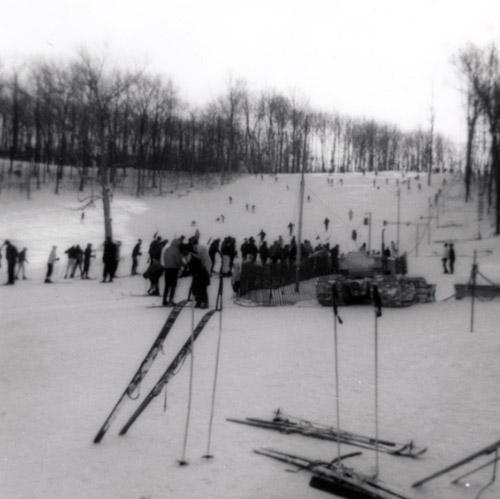
Chadds Peak, located near Philadelphia in Chadds Ford, Pennsylvania, offered roughly 200 to 300 feet of vertical, a Poma lift, rope tows, and two principal slopes. Richard and Marie Paciaroni, both schoolteachers, started the area in 1963 as a way to supplement their income. They operated it for approximately 20 years while raising four children, employing local teenagers, and introducing generations of nearby residents to skiing.
“We also taught thousands of people, young and old, how to ski,” Marie later told DCSki.
That role was repeated at small hills across the region. They provided an accessible entrance into the sport. A family did not have to reserve lodging, travel several hours, or commit to an expensive vacation. Children could learn close to home, teenagers could ski after school, and adults could spend an evening on the slopes after work.
Many lost ski areas were intertwined with residential or recreational developments. Skiing was one amenity among several, alongside lakes, swimming pools, tennis courts, horseback riding, restaurants, and vacation homes. Developers hoped winter recreation would attract buyers and transform rural land into four-season communities.
Bear Rocks, located near Mount Pleasant, Pennsylvania, embodied that model. The ski area included a double chairlift, rope tows, several trails, snowmaking, and an elaborate stone-and-timber lodge. The surrounding community offered warm-weather recreation as well.
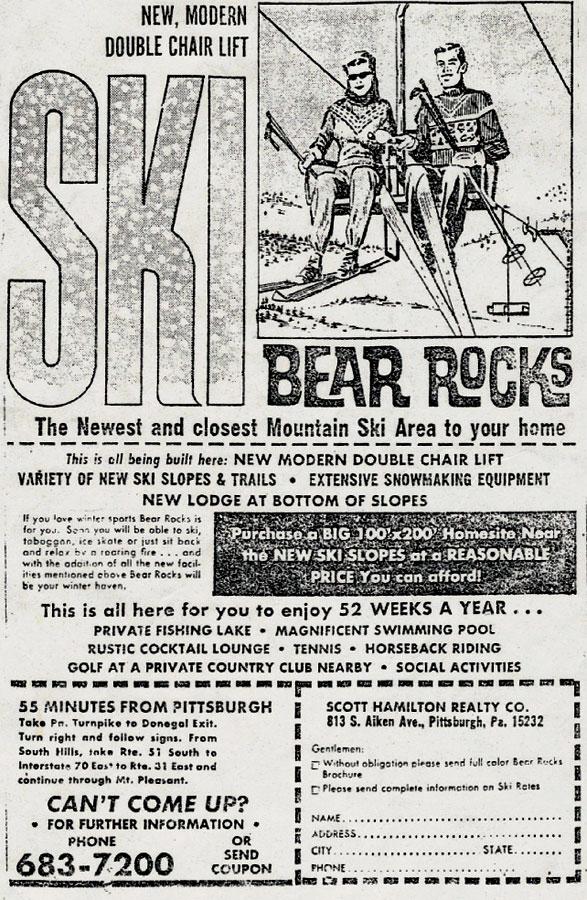
Denny Edwards, who built a chalet there in 1968, remembered the sound of the snowmaking system drifting through the community. “Heaven was falling asleep on a winter’s night to the sound of the snow making machines,” he wrote.
Bear Rocks appears to have operated through the 1972-1973 winter. The lodge later became a restaurant before being destroyed by fire, while homes eventually occupied portions of the former ski terrain. Yet the ski area remained central to the memories of people who had lived there. They recalled swimming, fishing, riding horses and motorcycles, picking blackberries, and spending weekends with neighboring families. Skiing was part of a larger community rather than a self-contained attraction.
Plateau De Mount, across Route 31 from Pennsylvania’s Hidden Valley Resort, followed a similarly ambitious approach. It reportedly included a double chairlift, seven trails, an impressive lodge, rental cabins, lakes, stables, and homes. Former visitors remembered swimming and horseback riding during the summer, then returning for skiing and snowmobiling in winter.
The contrast across the road proved consequential. Hidden Valley survived and continued to attract investment, while Plateau De Mount closed during the 1970s. Readers have suggested that its slopes suffered from unfavorable exposure, causing snow to melt quickly. Its location beside a successful competitor also provides a stark illustration of how two areas occupying nearly the same climate could follow very different paths.
The opening and closing dates in the Lost Ski Areas archive are incomplete, and some are based on memories that differ by several years. The available history nonetheless suggests a broad pattern. Many small ski areas appeared during the 1950s and 1960s. A significant number disappeared during the 1970s and 1980s as the economics and expectations surrounding the sport changed.
Apple Hill, near Allentown, Pennsylvania, had night skiing, snowmaking, a ski school, a rental center, an A-frame lodge, several trails, and approximately 250 feet of vertical. It closed in 1978. Christopher Hamm, whose father taught there, remembered a place where everyone knew everyone else.
“My folks had to literally drag us off the hill at closing time,” he wrote.
Apple Hill was large enough to cultivate a devoted community, but its modest vertical and surface lifts placed it in an increasingly difficult market. As larger areas expanded their snowmaking, installed chairlifts, improved grooming, and offered more terrain, the difference between a neighborhood ski hill and a modern resort grew wider.
The same forces affected small areas throughout the region. Customers who once accepted a rope tow, sparse grooming, and a basic warming hut began expecting chairlifts, dependable snow coverage, rental fleets, lessons, food service, and well-maintained facilities.
Snowmaking helped resorts operate through inconsistent winters, but installing and maintaining a powerful system required access to water, electricity, equipment, and substantial capital.
Modernization could become a cycle. Resorts with enough revenue improved their lifts and snowmaking, attracting more skiers and generating funds for further improvements. Smaller areas struggled to make the same investments. As their facilities aged, they became less competitive, and a poor winter could turn a gradual decline into a final closure.
Warm weather was therefore often one part of the story rather than a complete explanation. A financially strong resort could endure a disappointing season and try again the following year. A marginal operation carrying debt or facing major equipment repairs had no such cushion. DCSki’s recent story on the brutal 1997-1998 ski season explores the long-ranging impact one bad season can have in more detail.
Natural snowfall has always been unreliable across much of the Mid-Atlantic. The ski areas that survived learned to manufacture winter on a much larger scale.
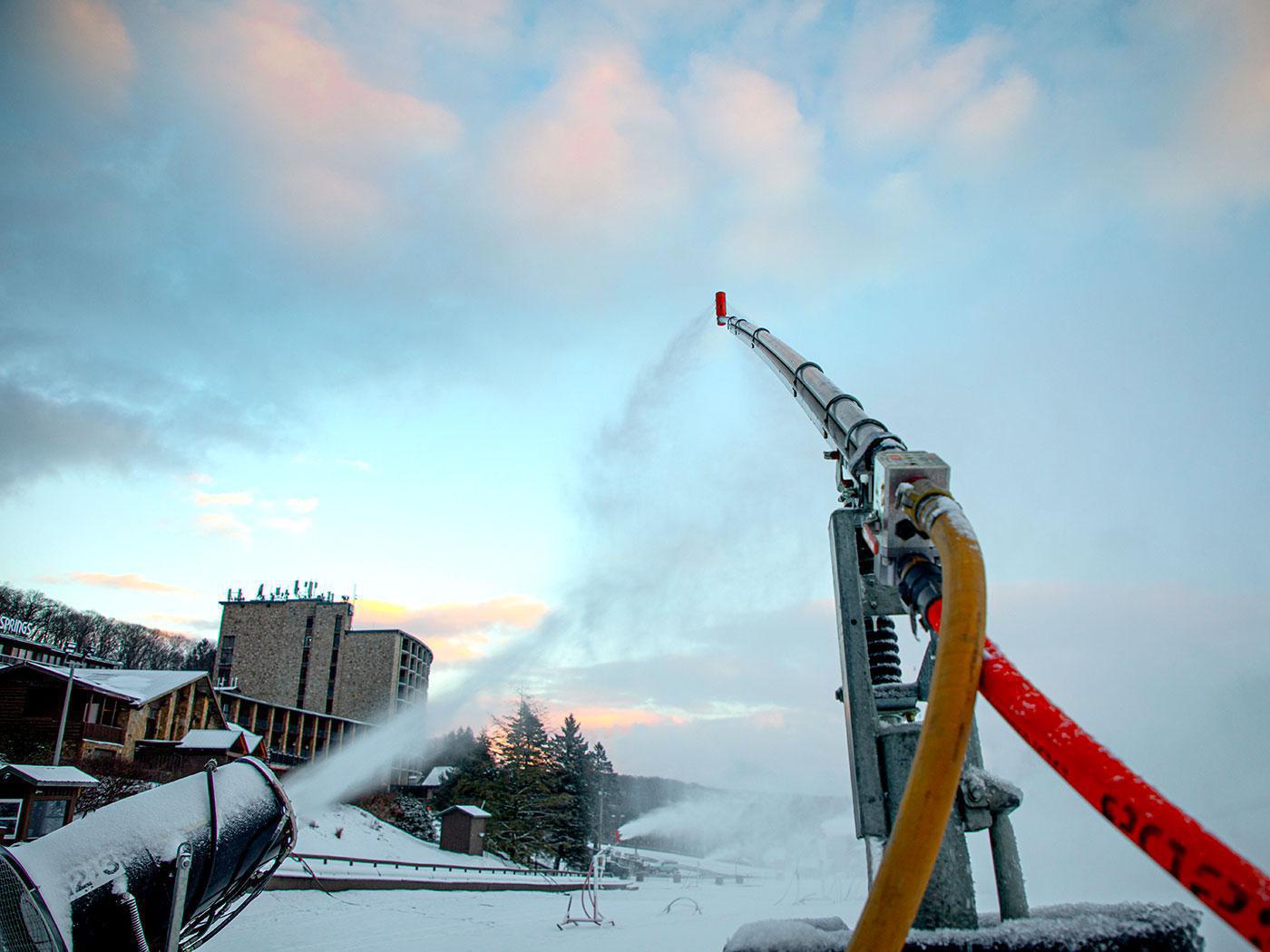
Pennsylvania’s Seven Springs Mountain Resort installed snowmaking in 1960 and became a center of snowmaking innovation under Herman K. Dupré. Maryland’s Wisp Resort benefited from the colder and snowier climate of western Maryland, along with abundant water from nearby Deep Creek Lake.
Pennsylvania’s Roundtop Mountain, Liberty Mountain, and later Whitetail Resort were developed with a strong emphasis on snowmaking and access to the Baltimore-Washington market. West Virginia’s Snowshoe Mountain Resort combined high elevation, favorable terrain, extensive lodging, and continuing outside investment, undergoing a wave of rapid expansion and investment after it was purchased by the Intrawest Corporation in the mid-1990s.
These resorts faced difficult winters, ownership changes, financial pressures, and periods when their futures were uncertain. Their survival was not inevitable.
They did, however, possess combinations of strengths that many lost areas lacked: stronger snowmaking resources, greater vertical, convenient access or destination appeal, room for expansion, access to capital, and enough revenue to replace aging infrastructure.
Scale also provided options. A larger resort could sell lodging, food, lessons, rentals, real estate, and summer activities. It could spread the cost of marketing, maintenance, insurance, and administration across a much larger operation.
A small hill that depended almost entirely on lift tickets sold during a short winter had little protection when rain arrived during a holiday week.
Small vertical and primitive equipment explain many closures, but the Lost Ski Areas archive also contains projects that appeared to have many ingredients for success.
Ski SnowPeak opened near Thompsontown, Pennsylvania, in early 1989 after nearly two decades of planning. The first phase reportedly offered 643 feet of vertical, nine trails, a 3,200-foot quad chairlift, and snowmaking. Developers envisioned extending the resort to the summit, which would have produced a claimed vertical drop of 1,340 feet.
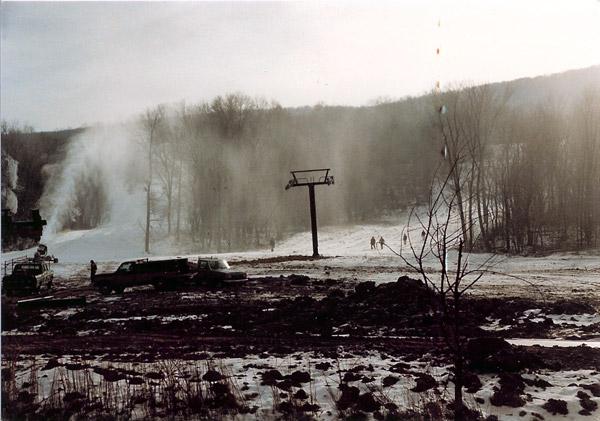
The mountain had northern exposure, access from U.S. Route 322, a position between Harrisburg and State College, and a potentially abundant snowmaking source in the Juniata River. On paper, it appeared far better equipped than many of the community hills that had disappeared during the preceding decades.
But it was bankrupt by 1991, reportedly carrying at least $4.3 million in debt. The lodge was destroyed by suspected arson in 1994, and subsequent interest in reopening the resort produced no revival. SnowPeak demonstrated that a promising mountain and modern lift were no defense against excessive debt, management problems, or an incomplete development plan.
Ski Cherokee near Linden, Virginia, offered another tantalizing proposition: approximately 1,000 feet of vertical within easy reach of Washington, D.C. It opened around 1990 and survived only two seasons. Warm winters, inadequate cash flow, and an insufficient snowmaking water supply have all been cited as factors.
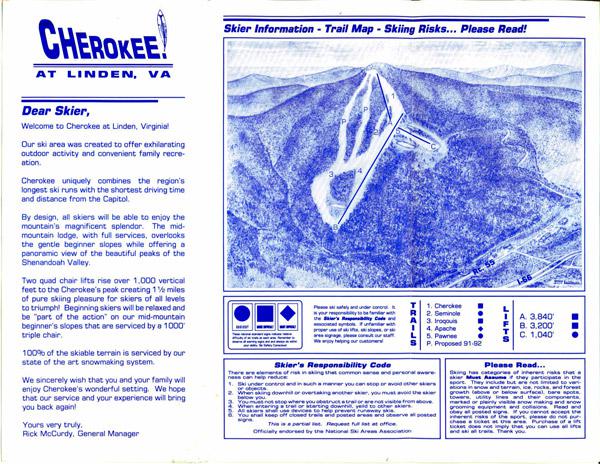
The resort’s unusual layout included a lodge midway up the mountain and a chairlift that did not reach the summit. One reader remembered uncrowded slopes, continuous snowmaking, impressive views, and lunch in the lodge — where the pizza was served “on white sandwich bread.”
Even decades later, visitors to DCSki have debated whether Cherokee could have succeeded with better financing, stronger snowmaking, and a different design. Its terrain and location continue to make the failure seem avoidable. That lingering debate reveals how difficult it can be to distinguish a fundamentally flawed site from a viable mountain paired with the wrong plan at the wrong time.
The resorts that remain open were not always the largest or most sophisticated areas in their neighborhoods. Many began modestly. Their defining advantage may have been the ability to survive long enough to grow.
Ski Roundtop opened in 1964 and became the foundation of Irvin Naylor’s Snow Time organization. Ski Liberty followed, and Whitetail Resort eventually joined the group. Each resort served a large metropolitan population and developed the snowmaking capacity necessary to open terrain during short windows of favorable weather. Investments made during one decade positioned the areas to withstand the next.
Seven Springs grew from a family retreat into one of the region’s largest resorts while pioneering snowmaking techniques. Wisp evolved from the earlier Marsh Mountain operation and benefited from terrain beside Deep Creek Lake. Snowshoe opened in 1974 with nine trails and three lifts, then expanded into a destination supported by ample lodging, real estate, restaurants, and year-round recreation.
Survival sometimes came down to resources that were not visible on a trail map. A deep snowmaking pond could be more important than another slope. Access to electrical capacity could determine how much snow a resort made during a brief cold snap. A nearby interstate could compensate for modest vertical, while lodging and real estate could support a remote mountain that required visitors to stay overnight.
Ownership also mattered. Ski areas consume capital constantly. Lifts age. Snowmaking pipe corrodes. Pumps, groomers, lodges, and rental equipment require replacement. The resorts still operating today passed through owners willing — or financially able — to continue making those investments.
Some lost areas reached a point where the underlying land became more valuable for another purpose. Once homes occupied a slope, a lodge burned, lifts were removed, or trees reclaimed the trails, reopening became progressively less plausible. A closed ski area can remain physically recognizable for years, but the infrastructure and institutional knowledge disappear much faster.
The decline of small ski areas brought safer lifts, stronger snowmaking, better grooming, and more dependable conditions at the resorts that remained, as they often absorbed the business lost by the smaller areas. But it also changed the relationship between skiing and local communities.
A 150-foot hill might hold little appeal for an experienced skier willing to drive several hours to a larger mountain. For a child taking a first lesson, a teenager looking for an evening job, or a family seeking an affordable winter outing close to home, though, that same hill could be invaluable.
Former skiers rarely describe lost areas only in terms of acreage or vertical. They remember lodge fireplaces, frozen gloves, school ski clubs, instructors, night skiing, first dates, first jobs, and the families they saw every weekend. The limitations of these areas helped make them intimate. Everyone really did seem to know everyone else.
That is why the histories remain important long after the lifts and buildings have vanished.
DCSki’s Lost Ski Areas project began with scattered memories and a desire to document places that had largely disappeared from the historical record. Over time, former owners, employees, instructors, patrollers, neighbors, and skiers contributed photographs, brochures, advertisements, trail maps, lift tickets, corrections, and thousands of personal recollections. In some cases, a vague memory of a rope tow grew into a detailed history extending across generations.
The archive remains incomplete. Some areas have extensive profiles filled with photographs and firsthand accounts. Others are represented by a name, an approximate location, and a few vague and uncertain details. Even the number of lost areas will continue to change as readers identify forgotten hills or resolve mysteries that have persisted for decades.
It is not unprecedented for a ski area that made its way to the lost areas list to bounce back; that happened with Pennsylvania’s Laurel Mountain. Other ski areas, such as West Virginia’s Timberline Mountain, were on the verge of permanently joining the lost areas list before dodging death and undergoing a revitalization.
Across the Mid-Atlantic, forests continue to close over old trails. Buildings deteriorate, artifacts disappear, and the generation that knew these places firsthand grows older. Preserving their stories has therefore become a race against time.
The mountains that did not make it still shaped the region’s skiing culture. They introduced people to the sport, trained instructors and racers, employed generations of young workers, and helped establish a market that allowed larger resorts to flourish.
Their failures also exposed the requirements for operating in a difficult climate: dependable snowmaking, adequate capital, favorable terrain, access to customers, and the ability to withstand winters that refuse to cooperate.
The lifts may be gone, but the history remains scattered across the landscape — and in the memories of the people who were there.
M. Scott Smith is the founder and Editor of DCSki. Scott loves outdoor activities such as camping, hiking, kayaking, skiing, and mountain biking. He is an avid photographer and writer.

Great article, but also very bittersweet for those of us that lived through the "larger story about the rise of recreational skiing in the region, the proliferation of small local hills, the transformation of skiing into a capital-intensive business, and the gradual consolidation of the industry around a smaller number of surviving resorts."
In a sense, the Mom & Pop aspect of skiing was killed off by the success of the more sophisticated resorts. I'm as guilty as anyone with expectations of skiing better snow, bigger lifts, and taller mountains each succeeding season. Yet, there is a really fine feeling when you spend a day at the rare smaller ski area that has remained viable and still functions well, even as it may have adapted in some way to find a winning niche in the market.
Examples of these "old school" survivors that I've enjoyed skiing at include Laurel Mountain, PA, Mad River Glen and Magic Mountain, VT, Saddleback and Mt Abram, ME, Sundance, UT, Monarch, CO, Diamond Peak, NV, Homewood, CA, Lost Trail, MT, Plattekill, NY, Black Mountain, NH, and Mt Norquay, Canada.

Join the conversation by logging in.
Don't have an account? Create one here.